So You Want to Ride Iceland
I get this question more than any other. "How do I go on a trek?"
Usually it comes with stars in the eyes. Photos of horses splashing through a glacial river, manes flying, mountains behind them. I love that you want it. I want it for you.
But a trek is not a photo. It is five to eight days of real riding, real weather, and real horses who have opinions. The women who come home glowing are the ones who showed up ready. So let's get you ready.
Here is what nobody tells you before you book.
The accommodations are part of the adventure
Set your expectations now and thank me later.
You are not checking into a spa. On a lot of highland treks you are staying in mountain huts and farm guesthouses. Bunk rooms. Shared everything. It is very normal for a whole group to share one shower, and sometimes there is no shower at all, just a sink and a good attitude.
This is not a downgrade. This is the point. You are out where the horses live, off the tourist ring, somewhere most people never see. The trade for that access is comfort.
So pack like it. Quick-dry layers. A microfiber towel that actually dries overnight. Earplugs, because someone in the bunkhouse will snore, and it might be you. Dry shampoo. Baby wipes. One pair of camp shoes so your feet get a break from your boots. Nobody out there cares how your hair looks. Everybody cares if you are pleasant to share a room with.
Come for the horses. Stay humble about the plumbing.
And there are no bathrooms out there
Let me say this plainly, because someone has to. There are not many toilets on the trail. Probably none at all. When nature calls, your bathroom is a rock, a bush if you are lucky, and the wide open Icelandic sky.
So get comfortable squatting and peeing in front of strangers, because you will be, and so will everyone else. The good news is the shyness wears off fast. By day two nobody is thinking about it. By day three you are a professional. Keep a little tissue in your pocket, pack it back out with you, and carry on. This is trail life. It comes with the horses.
The food is simple, and you pack your own lunch
Most trek companies feed you three meals a day. Do not expect variety. Expect fuel.
Breakfast is usually bread, cheese, and sliced meat. Coffee comes in small cups, so drink up while you can. Here is the part first-timers miss. At breakfast you are often handed the makings of your own lunch. You build a sandwich, wrap it, and tuck it into your saddlebag. That sandwich is what you eat at the lunch spot, wherever the horses decide to stop. So make a good one.
Dinner is usually fish or lamb. Simple, hot, and exactly what you want after a day in the wind.
Now the warning. If you are vegan or vegetarian, say so clearly on your booking form, and be specific. Do not assume anything. Some trek companies genuinely count fish as vegetarian. Spell out exactly what you do and do not eat before you ever arrive, because the middle of the highlands is a hard place to fix a food mix-up.
The terrain does what it wants
Iceland does not ease you in.
You will cross lava fields, black sand, bogs, and rivers that were snow this morning. The footing changes under you constantly, and your horse reads it faster than you do. Your job is to sit balanced, stay soft, and let those five legendary gaits carry you. The tölt exists for exactly this ground. Trust it.
The weather is the other rider on this trip. Sun, sideways rain, and wind that steals your hat can all happen before lunch. Waterproof outer layers are not optional. Wool against your skin, not cotton. Cotton gets wet and stays wet, and wet plus Icelandic wind is a miserable combination.
Respect the land and it hands you the ride of your life. Underestimate it and it hands you a lesson.
What to wear
Iceland's weather can change in seconds, so you dress for all of it at once. Layers are everything.
Here is my exact system. A long sleeve base layer, another shirt over that, and a light fleece jacket on top. That combination handles most of the day. Then bring your heavier coat along and keep it within reach, because the moment the wind turns you will want it. And if things get truly wild, most trekking companies hand out those bright orange water resistant suits. You wear them with zero shame. They work.
For your legs, ride in fleece lined riding pants. Stickyseat is my go-to, warm and grippy right where you need the grip to stay put in the saddle. One last thing, and do not skip it. Bring a mesh screen mask for your face. The midges in Iceland are tiny and relentless, and there will come a moment you would trade your horse for a bug net. Pack the net. Keep the horse.
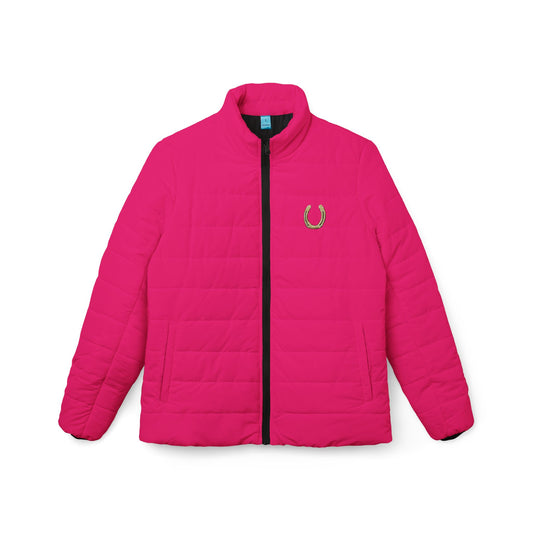
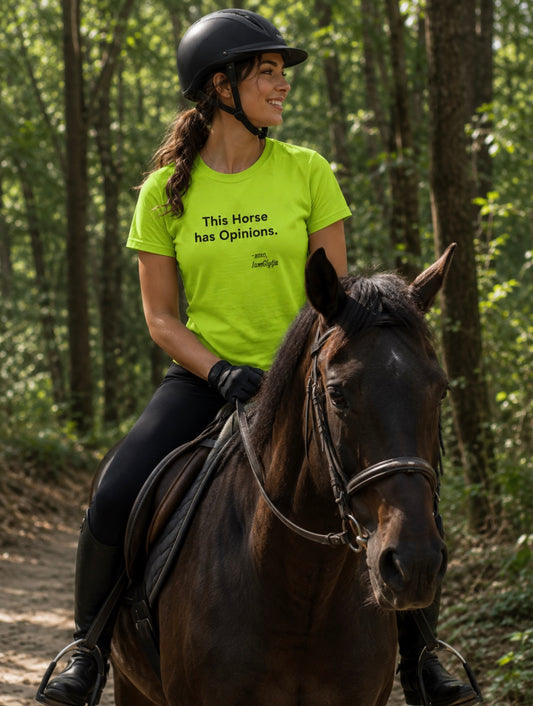
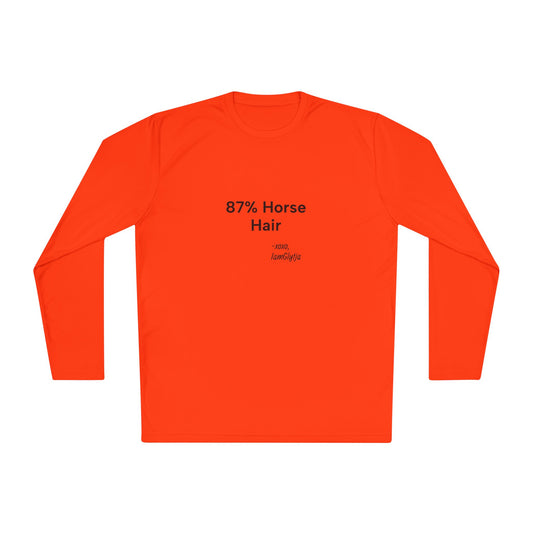
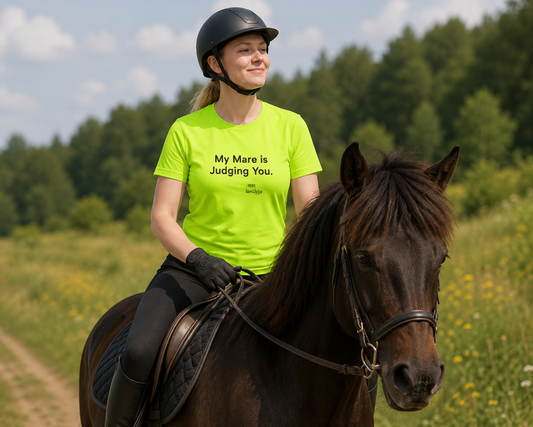
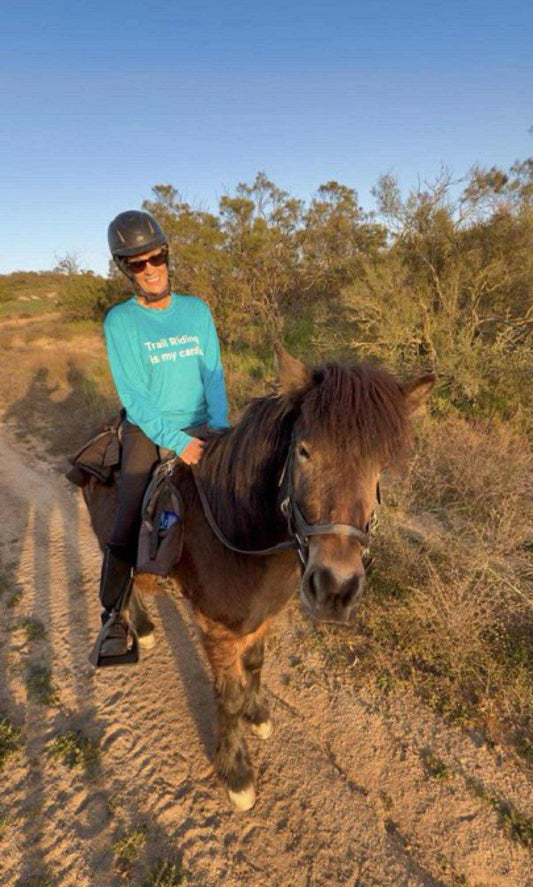
The bright layers I ride in at home came to Iceland with me. Same shirts, colder wind. Shop the trail riding collection.
How to sit the tölt
The tölt is why you came. Four beats, no bounce, smooth as water. But it only feels like magic if you let it.
Sit down and sit tall. Shoulders back, seat deep, lower back soft. Do not post. This is not a trot, there is nothing to rise to. Keep your hands low and steady with light contact, and keep the horse up in front, because a tölt lives in a horse that is carrying itself. Give it a reason to lift. Heels down, legs long and quiet. Let your hips follow the motion instead of fighting it.
The second you tense up and grip with your knees, the gait falls apart. So breathe. Melt into the saddle. Let the horse do the work it was born to do, and enjoy the smoothest ride of your life.
The weight limit is not about you
This one stings people, so let me say it plainly. It is not personal.
Most operators set a rider weight limit, usually counted with your gear on. It exists to protect the horse. The Icelandic is strong for its size, but it is a smaller horse carrying you over hard country for hours a day, week after week, season after season. The limit is how good operators keep their herd sound and happy.
Limits vary from farm to farm, so check the exact number with your operator before you book, not after. If you are close to the line, ask honest questions about which tour suits you. A good operator would rather place you well than watch you struggle on day one. This is care for the animal, and the best barns treat it that way.
Your body is the equipment you can't rent
You can rent a horse. You cannot rent stamina. Show up with your own.
Riding six hours a day uses muscles you forgot you owned. Inner thighs. Core. The small of your back. If your idea of exercise is walking to the barn, start earlier than you think you need to. I am not asking you to become an athlete. I am asking you to be able to get on, stay on, and get up the next morning and do it again with a smile.
Ride before you go if you possibly can. Even a few lessons will teach your seat things a gym never will. Build your core. Walk hills. Stretch your hips. And be honest with yourself about your fitness, because the trail will be honest with you either way.
The women who train a little come home wanting more. The ones who wing it come home sore and quiet. Be the first kind.
Be honest with your guide, and listen to them
Somewhere at the start, a guide will ask about your riding level so they can match you with the right horse. Tell the truth. All of it.
Here is why it matters. "Intermediate" in the United States and "intermediate" in Iceland are not the same word. Icelanders have been riding since before they could walk. Their beginner may be our intermediate, and their intermediate may be humbling. If you oversell yourself to sound impressive, you get a hotter horse than you can handle, and a mountain trail is not the place to find that out. Be honest, get the right horse, and enjoy the whole ride.
And once you are out there, the guide is in charge. If they tell you to stay behind them, stay behind them. This is not about rank. They know the ground, the river crossings, and the horses better than you ever will, and every instruction they give is keeping you and the herd safe. Courtesy to your guide is courtesy to your horse. Give it freely.
Where to book, and who it's for
People always ask which company. Here is who I send where.
Íslandshestar is for experienced riders. If you are confident at all gaits, comfortable for long days, and hungry for real highland distance, this is your trek. They will take you deep.
Eldhestar is for newer riders. I have ridden their trails myself, and they know how to give you a genuine multi-day trek without throwing you in over your head. If this is your first big trip, start here. You will finish it braver than you started.
Hestaland is for lessons and shorter fun tours. Want to sharpen your seat before a big trek, or spend a lighter day in the saddle without committing to a week? This is the place. Learn the tölt properly and everything else gets easier.
There is no wrong door here. There is only the right one for where you are right now.
The people, the farms, and the water
One more thing, and it might be my favorite.
Most trekking companies in Iceland are family and farmer owned. That horse under you? There is a very good chance it was born and raised right there on the farm, by the same hands serving you dinner. You are not renting from a corporation. You are a guest on someone's land, riding someone's family.
Icelanders will do almost anything to make you happy. Their livelihood depends on a good summer, and they take that personally. So here is the deal. If you have a good time, tell everyone. Your friends, your family, your barn, the whole internet. Word of mouth keeps these farms alive, and these farms keep the Icelandic horse alive. That is the whole circle, and you are part of it now.
You will also meet the extended family. Some Icelandic farmers bring in guides from Germany, Denmark, Sweden, Finland, and beyond to help through the busy summer treks, and your fellow riders come from all over too. They all speak English. They all want to help. Say yes to the friendships.
And drink the water. Straight from the tap, straight from the stream your guide points at. Icelandic water is some of the best on earth, and it is free and everywhere. Fill your bottle. Thank me later.
The real prep
Manage your expectations. Layer up and pack a bug net. Pack a good sandwich and speak up about your food. Respect the terrain and let the tölt carry you. Honor the weight limit. Train your body. Be honest with your guide, and stay behind them when they say so. Book the trek that fits you, not the one that fits your ego.
Do that, and Iceland gives you something you cannot buy and cannot fake. Days on horseback in a country that looks like the beginning of the world, with a horse who has decided to carry you through it.
You asked how to go on a trek. That is how. Now go.
Ride along
One more thing. I just rode this trek myself. Every muddy, windblown day of it is landing on the Iceland Trek page and in our emails first. Get on the list. You'll see it before anyone.
Born of fire and ice. See you on the trail.